
| Home | About | Arts | Sport | Travel | Politics | Philosophy | Technology | Finally... |
What music means
» By Jacob Booty
Music lifts the soul, and releases it. Music moves us; it shapes who we are and understands us. It draws us nearer to our inner core and permits self expression. Music prevents us from living silent, indistinct and hidden lives.
All across Africa from country to country, music exists as a fundamental element of daily life. It is used as escapism from the dire nature of poverty stricken areas such as the Lagos and Kinshasa slums and allows these people to forget the world as it is, and enter if only for a minute a parallel world of melody and storytelling in which people can dream of what they desire. The music narrates tales of joy, tales of woe and ferments a motivation to conquer the undeniable strife that these individuals are faced with. They sing because no one can stop them and because it brings them cheer and happiness. For instance, in certain regions in the South West of the African continent people sing what is known as "Baka" music in which they express their positive feelings about being alive. Congregations of assorted drums such as the Kidi or Gankogui accompanied by melodic instruments all gather in small towns and villages to celebrate religion, to celebrate birth, initiation to adulthood and to celebrate the wonders of life. On a weekly basis they come together and sing as a community and bring themselves closer to each other, listening to “Baka” music, you can almost feel the enthusiasm oozing from each voice as energy fizzes frantically around the gatherings. They give thanks for what we as humans have, through the voice of music.
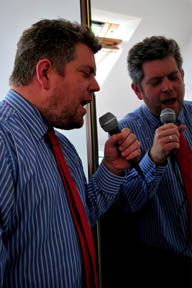 Music fulfils an influential role in religion across the world. Here in England, within the Christian Church people sing hymns to rejoice, to reflect and to give thanks. This is mirrored in so many other countries as the power of song allows us to communicate messages of ecstasy, hope or woe for example. Why do we use songs in religion? Simply because everyone can sing. No one can stop you; no one will tell you that you haven’t got the right; no one can deny you this joy of singing. With melody, it is possible to express emotions and sentiments towards God. Even the non religious can appreciate the value of these songs of praise as they allow the individuals to join part of a group and show how much their religion means to them. There is concrete reasoning behind why particular hymns have been around for so long, hymns that have conquered time show their value through our appreciation for them. They existed, and will continue to exist as respected and fully deserving pieces of history that preach the story of God. Music forms a fundamental part of religious practice.
How and why does music bring people together? It is an element of culture that means different things to different people. It can be used as a manner of escapism, to forget the worries of life and literally switch off. Not only does it provide escapism but also entertainment. In adverts, programmes, festivals, concerts, sports matches, schools, beaches and almost everywhere else you will be able to find music. Even in the most obscure of places, there will be music of some kind. In the rugby world, music is used to spark adrenaline prior to each match. The New Zealand team demonstrate this by performing the Haka every time before they play incorporating song and dance with aggressive shouts and stamps to act as the catalyst for augmenting their own aggression and enthusiasm. The Haka provides cohesion in the team as they join together as one to display the message of unity and solidarity amongst the ranks of the All Black unit.
In Morocco, music takes a very different role of being performed as an essential part of preparation before sacrifices for God. Gnawa music combines rhythms and melodies to give thanks and prayer to God before giving the lives of particular animals. The music shapes the mood; it portrays feeling and is a vehicle for the expression of thoughts that perhaps cannot be articulated verbally. These people need a mode of portraying how they feel and their music provides an expressive method of doing so.
However, music can never mean one concrete thing to everyone in the world, everyone can and does interpret it slightly differently. I personally use music as a manner of forgetting all the work I have to do, whereas you may use it as a means of spurring yourself on to do that work. I use music as self expression whereas you may use it to grasp the message of someone else.
The extent to which the use of music differs is extraordinary, but the fact remains that it is essential. Expression of thought, articulation of mind and indulgence in world of melody and meaning all mould music into a primordial factor of daily life. Music gives us reason. Music lifts the soul, and releases it.
All across Africa from country to country, music exists as a fundamental element of daily life. It is used as escapism from the dire nature of poverty stricken areas such as the Lagos and Kinshasa slums and allows these people to forget the world as it is, and enter if only for a minute a parallel world of melody and storytelling in which people can dream of what they desire. The music narrates tales of joy, tales of woe and ferments a motivation to conquer the undeniable strife that these individuals are faced with. They sing because no one can stop them and because it brings them cheer and happiness. For instance, in certain regions in the South West of the African continent people sing what is known as "Baka" music in which they express their positive feelings about being alive. Congregations of assorted drums such as the Kidi or Gankogui accompanied by melodic instruments all gather in small towns and villages to celebrate religion, to celebrate birth, initiation to adulthood and to celebrate the wonders of life. On a weekly basis they come together and sing as a community and bring themselves closer to each other, listening to “Baka” music, you can almost feel the enthusiasm oozing from each voice as energy fizzes frantically around the gatherings. They give thanks for what we as humans have, through the voice of music.
Music fulfils an influential role in religion across the world. Here in England, within the Christian Church people sing hymns to rejoice, to reflect and to give thanks. This is mirrored in so many other countries as the power of song allows us to communicate messages of ecstasy, hope or woe for example. Why do we use songs in religion? Simply because everyone can sing. No one can stop you; no one will tell you that you haven’t got the right; no one can deny you this joy of singing. With melody, it is possible to express emotions and sentiments towards God. Even the non religious can appreciate the value of these songs of praise as they allow the individuals to join part of a group and show how much their religion means to them. There is concrete reasoning behind why particular hymns have been around for so long, hymns that have conquered time show their value through our appreciation for them. They existed, and will continue to exist as respected and fully deserving pieces of history that preach the story of God. Music forms a fundamental part of religious practice.How and why does music bring people together? It is an element of culture that means different things to different people. It can be used as a manner of escapism, to forget the worries of life and literally switch off. Not only does it provide escapism but also entertainment. In adverts, programmes, festivals, concerts, sports matches, schools, beaches and almost everywhere else you will be able to find music. Even in the most obscure of places, there will be music of some kind. In the rugby world, music is used to spark adrenaline prior to each match. The New Zealand team demonstrate this by performing the Haka every time before they play incorporating song and dance with aggressive shouts and stamps to act as the catalyst for augmenting their own aggression and enthusiasm. The Haka provides cohesion in the team as they join together as one to display the message of unity and solidarity amongst the ranks of the All Black unit.
In Morocco, music takes a very different role of being performed as an essential part of preparation before sacrifices for God. Gnawa music combines rhythms and melodies to give thanks and prayer to God before giving the lives of particular animals. The music shapes the mood; it portrays feeling and is a vehicle for the expression of thoughts that perhaps cannot be articulated verbally. These people need a mode of portraying how they feel and their music provides an expressive method of doing so.
However, music can never mean one concrete thing to everyone in the world, everyone can and does interpret it slightly differently. I personally use music as a manner of forgetting all the work I have to do, whereas you may use it as a means of spurring yourself on to do that work. I use music as self expression whereas you may use it to grasp the message of someone else.
The extent to which the use of music differs is extraordinary, but the fact remains that it is essential. Expression of thought, articulation of mind and indulgence in world of melody and meaning all mould music into a primordial factor of daily life. Music gives us reason. Music lifts the soul, and releases it.
How To Bluff your Buff
» By Christian Field
So you want to be a film buff, eh? You want to become one of the elite? One of those who know just about everything worth knowing in film? Well I have a news flash for you buddy, you don’t currently have what it takes! … But I can give you a few pointers on how to pretend you know what you’re talking about and that’s good enough for now…
1. Confidence: 99% of this game is being able to convince people that what you’re talking about is both real and important. Remember that when you speak every detail is being scrutinised, so to get around this you need to speak with complete conviction. Never break eye contact, speak at a steady pace and stand tall. This coupled with a believable story can make you both interesting and alluring to any ‘target’. Take a great masterpiece, which shaped most of our childhoods, “Toy Story” as an example. Woody has the fun, lovable personality of a Spaniel, but Buzz, Buzz has the cold wit and sharp charisma that is vital in this game. Model yourself after this fine specimen and you shall be very much on your way. Bear in mind however, that spewing some nonsense about “Plimsoll the flatulent” which you saw last week isn’t going to convince or astound everyone and you might find yourself slipping from sleek to geek! We want to fly, not fall with style.
2. Depth of Knowledge: The genuine film buff will have seen films of which the average man has never even heard. This is an attribute you must mirror to fully take on this persona. A good way to prepare for this is by watching at least one underground film that most people could never know (the more extreme and terribly made the better). On that note, try watching “Troll 2”. It’s widely known for being one of the worst films ever conceived. You can constantly refer back to these films in any way you like. This is guaranteed to make you sound well informed and it’s from this that your confidence will grow! For example, incorporate little known films with little know facts about them like “I was watching “The Crow” last night, its fantastic… just fantastic… Did you know that star Brandon Lee died on the set of the film?”!
 3. Needlessly Strong Point of View: A key component to any film buff’s arsenal is their opinion. Often, the buff has an incredibly strong view that defies general perception in one way or another. Having such a view can help to maintain continual conversation, establish your knowledge and give you room for saucy banter over conflicting views. Now, this opinion does not necessarily have to be genuine, as long as it succeeds in engaging the target and making you seem like nothing short of a MASTER in the field of film. Though the “Needlessly Strong Point of View” is a tactic designed to cause conflict, some decorum is required for effective application. It might as well be written in stone that certain films or series, are intrinsically untouchable. Phrases like “Star Wars” was the worst saga in film history” are guaranteed to result in annihilation from anyone who’s even passed a cinema, smelling only the stale popcorn as the doors are flung open by people trying to escape the new “Twilight” instalment. Furthermore, it completely deconstructs your persona as only a rookie would cite the holy trinity as nothing short of a masterpiece! Films such as “Star Wars”, “The Godfather”, “James Bond” and “The Lord of the Rings” should be considered untouchable unless used in contrast with each other. An example of this would be “As far as epic battles are concerned, “Star Wars” pales in comparison to the “Lord of the Rings!”.
4. Genre Dexterity: By having a healthy knowledge of films that span the genres, you can safely traverse any film related conversation. The vast sum of genres and subsequent sub-genres is staggering. The key point to take away from this is never fail to specify! You do not just like comedy, you like dark comedy, comedy so dry it gets stuck in your throat like a chunk of Ryvita. If you are ever asked the question “What’s your favourite film?”, you should not hesitate to reply with an unnecessarily detailed answer like “I like horror, mainly surrounding the foreign zombie sub-genre, but I would never pass up a simple comedy, sci-fi or any action/adventure starring Samuel L. Jackson”. This does not really answer the question but it does make it seem like you have and, furthermore, it makes it seem like you have digested a veritable library of films! Mmm crunchy!
5. Director/Time Period/Cult Film Knowledge: To complete the sculpting of your persona as an undisputed champion of film, you need to do a small amount of ground work. Begin by noticing the names of the directors in every film you watch from now on. Most people don’t and this is what will set you apart from the clueless masses. Once you start doing this, watch a film from every decade 1950 onwards, “The Quiet Man” (1952), “Lawrence of Arabia” (1962), “Apocalypse Now” (1979) etc. Make sure they are good films with meaty content (this does not mean that they have to be well known). These will double the size of your “knowledge”. Now, the final step. Watching films that are considered to have a cult following. This will put you into the shoes of only a wannabe film buff, in that some of the most famous and successful films of all time like “Pulp Fiction” are considered to have a cult following. These films are good, but not underground in any way. Go for, the Spanish zombie horror “[Rec]”, Kevin Smith’s chaotic comedy “Dogma” and the time travelling travesty “Bill and Ted’s Excellent Adventure”. After having a grasp on these so called ‘cult’ films, you can move on to the reality of the phrase. Look for films that have had terrible success, are very low budget and only interest a few spotty fans. With an idea of these kinds of films, you will be in a position to impress any target with your substantial ‘knowledge’!
With these five simple steps, you will be in a position to flabbergast your family, friends and chosen ‘target’. Just remember, it takes nothing short of strict determination and passion to reach the pedestal on which you can finally be called that most prestigious of titles, a “Film Buff”… But pretending can be just as fun!
1. Confidence: 99% of this game is being able to convince people that what you’re talking about is both real and important. Remember that when you speak every detail is being scrutinised, so to get around this you need to speak with complete conviction. Never break eye contact, speak at a steady pace and stand tall. This coupled with a believable story can make you both interesting and alluring to any ‘target’. Take a great masterpiece, which shaped most of our childhoods, “Toy Story” as an example. Woody has the fun, lovable personality of a Spaniel, but Buzz, Buzz has the cold wit and sharp charisma that is vital in this game. Model yourself after this fine specimen and you shall be very much on your way. Bear in mind however, that spewing some nonsense about “Plimsoll the flatulent” which you saw last week isn’t going to convince or astound everyone and you might find yourself slipping from sleek to geek! We want to fly, not fall with style.
2. Depth of Knowledge: The genuine film buff will have seen films of which the average man has never even heard. This is an attribute you must mirror to fully take on this persona. A good way to prepare for this is by watching at least one underground film that most people could never know (the more extreme and terribly made the better). On that note, try watching “Troll 2”. It’s widely known for being one of the worst films ever conceived. You can constantly refer back to these films in any way you like. This is guaranteed to make you sound well informed and it’s from this that your confidence will grow! For example, incorporate little known films with little know facts about them like “I was watching “The Crow” last night, its fantastic… just fantastic… Did you know that star Brandon Lee died on the set of the film?”!
3. Needlessly Strong Point of View: A key component to any film buff’s arsenal is their opinion. Often, the buff has an incredibly strong view that defies general perception in one way or another. Having such a view can help to maintain continual conversation, establish your knowledge and give you room for saucy banter over conflicting views. Now, this opinion does not necessarily have to be genuine, as long as it succeeds in engaging the target and making you seem like nothing short of a MASTER in the field of film. Though the “Needlessly Strong Point of View” is a tactic designed to cause conflict, some decorum is required for effective application. It might as well be written in stone that certain films or series, are intrinsically untouchable. Phrases like “Star Wars” was the worst saga in film history” are guaranteed to result in annihilation from anyone who’s even passed a cinema, smelling only the stale popcorn as the doors are flung open by people trying to escape the new “Twilight” instalment. Furthermore, it completely deconstructs your persona as only a rookie would cite the holy trinity as nothing short of a masterpiece! Films such as “Star Wars”, “The Godfather”, “James Bond” and “The Lord of the Rings” should be considered untouchable unless used in contrast with each other. An example of this would be “As far as epic battles are concerned, “Star Wars” pales in comparison to the “Lord of the Rings!”.4. Genre Dexterity: By having a healthy knowledge of films that span the genres, you can safely traverse any film related conversation. The vast sum of genres and subsequent sub-genres is staggering. The key point to take away from this is never fail to specify! You do not just like comedy, you like dark comedy, comedy so dry it gets stuck in your throat like a chunk of Ryvita. If you are ever asked the question “What’s your favourite film?”, you should not hesitate to reply with an unnecessarily detailed answer like “I like horror, mainly surrounding the foreign zombie sub-genre, but I would never pass up a simple comedy, sci-fi or any action/adventure starring Samuel L. Jackson”. This does not really answer the question but it does make it seem like you have and, furthermore, it makes it seem like you have digested a veritable library of films! Mmm crunchy!
5. Director/Time Period/Cult Film Knowledge: To complete the sculpting of your persona as an undisputed champion of film, you need to do a small amount of ground work. Begin by noticing the names of the directors in every film you watch from now on. Most people don’t and this is what will set you apart from the clueless masses. Once you start doing this, watch a film from every decade 1950 onwards, “The Quiet Man” (1952), “Lawrence of Arabia” (1962), “Apocalypse Now” (1979) etc. Make sure they are good films with meaty content (this does not mean that they have to be well known). These will double the size of your “knowledge”. Now, the final step. Watching films that are considered to have a cult following. This will put you into the shoes of only a wannabe film buff, in that some of the most famous and successful films of all time like “Pulp Fiction” are considered to have a cult following. These films are good, but not underground in any way. Go for, the Spanish zombie horror “[Rec]”, Kevin Smith’s chaotic comedy “Dogma” and the time travelling travesty “Bill and Ted’s Excellent Adventure”. After having a grasp on these so called ‘cult’ films, you can move on to the reality of the phrase. Look for films that have had terrible success, are very low budget and only interest a few spotty fans. With an idea of these kinds of films, you will be in a position to impress any target with your substantial ‘knowledge’!
With these five simple steps, you will be in a position to flabbergast your family, friends and chosen ‘target’. Just remember, it takes nothing short of strict determination and passion to reach the pedestal on which you can finally be called that most prestigious of titles, a “Film Buff”… But pretending can be just as fun!
Ghost Poet: A New Voice In Music
» By Jack Revell
Sound is vibration. This is the first thing of which I am violently reminded as Ghostpoet begins his set at the O2 Academy, filling the room with dark brooding bass. Ghostpoet, real name Obaro Ejimiwe, describes his music as “Experimental Electronic Hip-Hop”. Rooted in slam/def poetry origins, Ghostpoet utilises lyrics that are thoughtful and potent, loaded with emotion and honesty, putting them against a hectic wobbly mess of bass and sporadic beats. Half-tipsy, half-desperate, his music describes the idiosyncrasies of life in a relaxed and blurry medium.
From his first entrance, wine bottle in hand and a cheeky grin flashed to the audience, Ghostpoet is instantly likeable. Slow hypnotic rhythm takes over the room at the o2 and bounces about the heads of all inside the small venue. Ghostpoet’s boozy drawl becomes your conscience and you stand half-conscious of your surroundings, wrapped up in some of the warmest and most mind-melting bass legally available anywhere in the UK. His sound is weightless and deep, perfectly complementing the dark lyrical content. Relaxation soaks through the audience who hang on the every word and movement of Mr. Poet. The building shakes, our heads loll along to the rhythm and the vibrations from the speakers reach levels strong enough to require masking tape to hold his laptop to the table.
 Peanut Butter Blues and Melancholy Jam, the debut album from this trend breaking hip-hop artist, is mishmash of genres and styles all given a fuzzy Ghostpoet coating. This is the result of trying to record an album in between shifts at a full time job. Every song on the album is similar yet distinct. They all contain resonating electronic sounds and cleverly crafted lyrics, but are decorated in different melodies and punctuated with stick-in-your-head riddims. Arguably the best track on the album (It’s the one that got the biggest applause) Cash and Carry me Home is a boozy mix up of echoing, pulsating bass and lyrical flows that run into each other like a hung over stream. Survive it, another of the most commended tracks on the album, discusses life “when you got no cash” and eating “dinners for one”. Despite its dark outlook and moody content, Survive it is an ultimately positive song with up-beat and resonant chords interspersed with female vocals and James Bond references. The music is a clash of optimism and pessimism, reflected both in the music and the lyrics. Thick choruses and throbbing beats are the defining characteristics of this hip-hop electronica album.
If you have never been, then I would seriously recommend you go and see a gig at the far smaller, far hotter upstairs of the o2 Academy. Downstairs fits a thousand people, sweaty and standing, while upstairs would struggle to contain four hundred, though expect to be much, much sweatier. The gigs here are more intimate, the front man will actually be able to talk to you and there usually isn’t a large Samoan rugby team drop out between you and the performers.
Nominated for the Mercury Prize’s Best Album of the Year, Ghostpoet is currently on his first headline tour of the UK and beyond. It is unlikely that he will be returning to Oxford any time soon. However if you feel compelled enough to make the trek up to London he is set to play KOKO on15 February.
There is genuine love in the audiences of Ghostpoet and that love seeps out into the streets, onto the websites and into the minds and iPod’s of those always on the lookout for new and exciting music. Raw, rhythmic and really, really good, Ghostpoet is definitely a musician on the rise.
From his first entrance, wine bottle in hand and a cheeky grin flashed to the audience, Ghostpoet is instantly likeable. Slow hypnotic rhythm takes over the room at the o2 and bounces about the heads of all inside the small venue. Ghostpoet’s boozy drawl becomes your conscience and you stand half-conscious of your surroundings, wrapped up in some of the warmest and most mind-melting bass legally available anywhere in the UK. His sound is weightless and deep, perfectly complementing the dark lyrical content. Relaxation soaks through the audience who hang on the every word and movement of Mr. Poet. The building shakes, our heads loll along to the rhythm and the vibrations from the speakers reach levels strong enough to require masking tape to hold his laptop to the table.
Peanut Butter Blues and Melancholy Jam, the debut album from this trend breaking hip-hop artist, is mishmash of genres and styles all given a fuzzy Ghostpoet coating. This is the result of trying to record an album in between shifts at a full time job. Every song on the album is similar yet distinct. They all contain resonating electronic sounds and cleverly crafted lyrics, but are decorated in different melodies and punctuated with stick-in-your-head riddims. Arguably the best track on the album (It’s the one that got the biggest applause) Cash and Carry me Home is a boozy mix up of echoing, pulsating bass and lyrical flows that run into each other like a hung over stream. Survive it, another of the most commended tracks on the album, discusses life “when you got no cash” and eating “dinners for one”. Despite its dark outlook and moody content, Survive it is an ultimately positive song with up-beat and resonant chords interspersed with female vocals and James Bond references. The music is a clash of optimism and pessimism, reflected both in the music and the lyrics. Thick choruses and throbbing beats are the defining characteristics of this hip-hop electronica album.
If you have never been, then I would seriously recommend you go and see a gig at the far smaller, far hotter upstairs of the o2 Academy. Downstairs fits a thousand people, sweaty and standing, while upstairs would struggle to contain four hundred, though expect to be much, much sweatier. The gigs here are more intimate, the front man will actually be able to talk to you and there usually isn’t a large Samoan rugby team drop out between you and the performers.
Nominated for the Mercury Prize’s Best Album of the Year, Ghostpoet is currently on his first headline tour of the UK and beyond. It is unlikely that he will be returning to Oxford any time soon. However if you feel compelled enough to make the trek up to London he is set to play KOKO on15 February.
There is genuine love in the audiences of Ghostpoet and that love seeps out into the streets, onto the websites and into the minds and iPod’s of those always on the lookout for new and exciting music. Raw, rhythmic and really, really good, Ghostpoet is definitely a musician on the rise.